
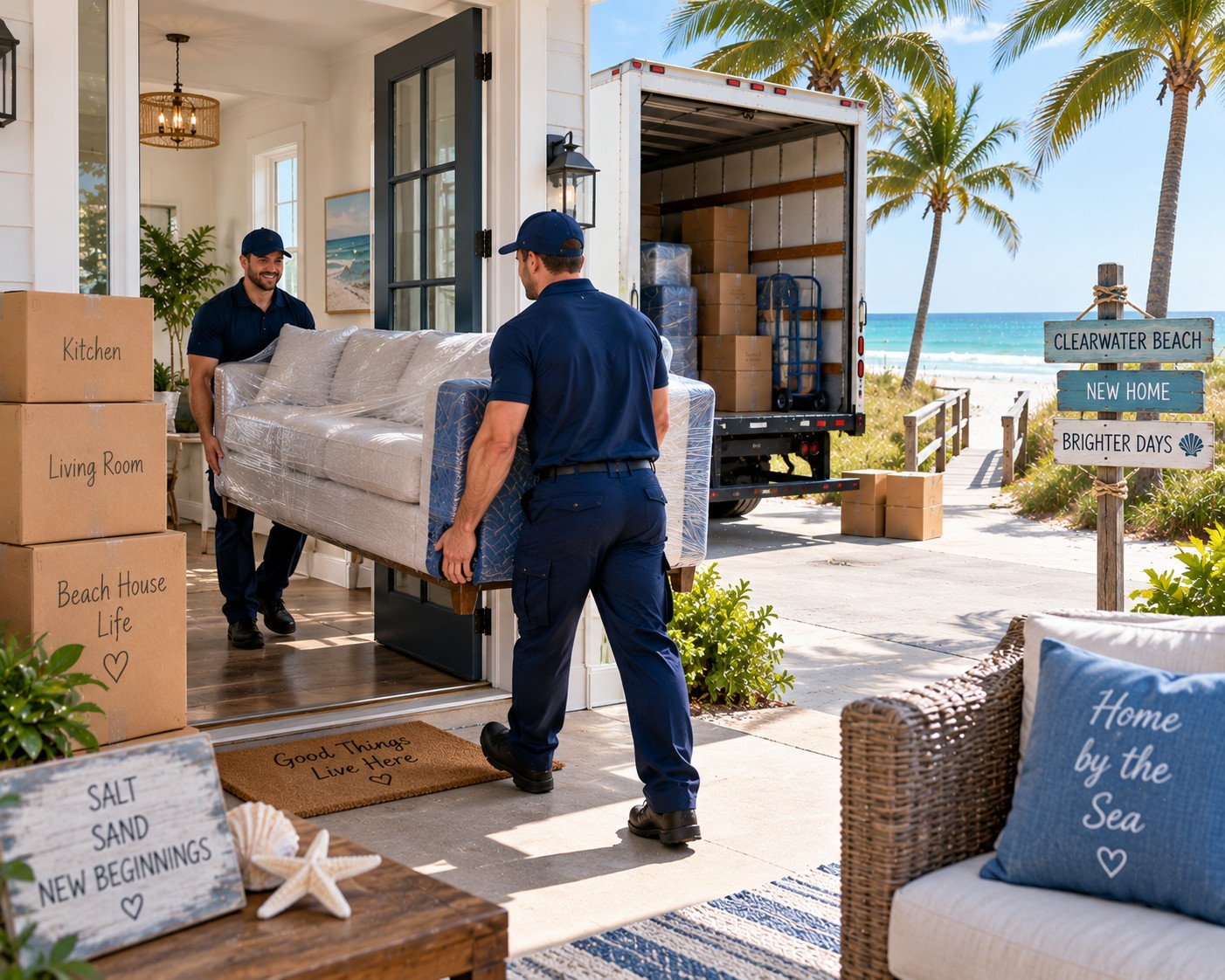
Moving to a coastal home comes with a different rhythm. There may be beach equipment in the garage, salt-exposed outdoor furniture on the patio, large windows requiring careful protection, and limited space for trucks or temporary staging. A relocation around Clearwater Beach therefore deserves more than a standard box-and-truck approach.
Whether the move is prompted by a new home, a change in household size, or a desire to live closer to the water, https://dunedinmovers.com/ can be a useful starting point for arranging professional moving assistance and planning the practical details.
Prepare the Property Before Moving Day
A coastal relocation becomes easier when the household is edited before packing begins. Go through closets, storage areas, garages, and outdoor spaces and decide what genuinely belongs in the next home.
Beach chairs, umbrellas, bicycles, paddle equipment, patio pieces, and seasonal items can quickly add volume to a household shipment.
Separate Outdoor Belongings
Outdoor furniture should be cleaned and dried before being packed. Sand, moisture, and accumulated debris should not travel unnecessarily into the new property.
Smaller beach accessories can be grouped together, while larger equipment should be labeled clearly so it can be placed in an appropriate storage area after arrival.
Think About Coastal Access
A beautiful location does not always mean straightforward moving access. Narrow residential streets, limited parking, gated properties, stairways, elevators, landscaping, and compact driveways can influence how furniture reaches the front door.
The Clearwater-specific moving information at https://dunedinmovers.com/movers-in-clearwater-fl/ can help homeowners explore professional assistance when planning a relocation in the area.
Identify Difficult Entry Points
Walk through the property before the move and consider the route for large furniture. Measure doorways if necessary and note any sharp turns or low-clearance areas.
It is much easier to identify a problem while the home is empty than when a large sofa is already waiting outside the entrance.
Protect Furniture From the Coastal Environment
Humidity and salt air are familiar parts of life near the Gulf. During a relocation, furniture should be handled carefully and protected from unnecessary exposure.
Wooden surfaces, upholstered pieces, mirrors, electronics, and delicate finishes deserve particular attention. Protective wrapping can help reduce the chance of scratches, scuffs, and dirt during carrying and transportation.
Be Careful With Electronics
Televisions, computers, speakers, and other electronic equipment should be packed securely. Allow equipment that has been exposed to significant temperature or humidity changes to acclimate appropriately before use, particularly when moving between different environments.
Keeping cables, remotes, and accessories with their corresponding devices also makes setup much easier.
Don’t Overlook the Garage
In many coastal homes, the garage functions as more than a place for a vehicle. It may hold everything from fishing equipment to bicycles and gardening tools.
Instead of throwing all garage contents into miscellaneous boxes, create categories before packing.
Label for the New Storage Layout
Use labels such as “beach gear,” “tools,” “sports equipment,” or “seasonal storage.” When the shipment arrives, those categories can be placed directly into their intended areas.
This small organizational step can prevent the garage from becoming the last unresolved part of the relocation.
Make Furniture Placement Part of the Plan
Coastal homes often emphasize open living areas, patios, balconies, and views. Furniture placement should account for those features.
Before unloading, decide where sofas, dining furniture, beds, cabinets, and outdoor pieces should go. If the new home has a different floor plan, do not assume that the arrangement from the previous residence will work.
A simple room-by-room placement plan gives the moving crew clear instructions and reduces the amount of furniture that has to be repositioned later.
Leave Some Flexibility in the Schedule
Home closings, repairs, painting, cleaning, and property access can affect a moving schedule. If the new residence is not completely ready, temporary storage may be worth considering rather than filling a partially finished property with furniture.
This can be especially helpful when floors are being replaced or interior work is still underway.
For households relocating around Clearwater Beach, the objective is not simply to transport possessions from one coastal address to another. It is to protect furniture, manage access, organize outdoor belongings, and make the new property functional as quickly as possible.
With thoughtful preparation and professional support, a coastal relocation can be organized around the realities of the home rather than improvised once moving day begins.