
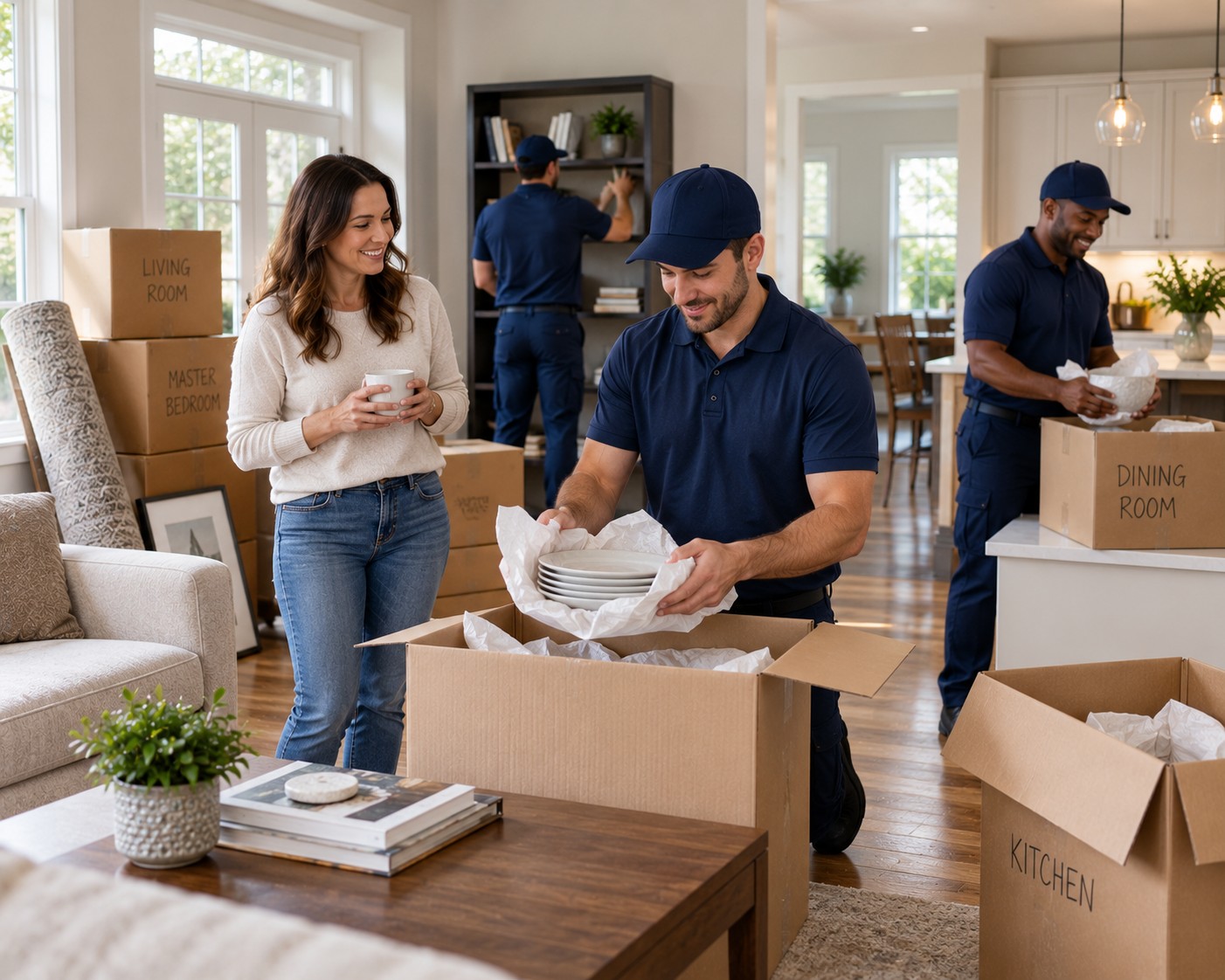
Moving day often gets all the attention, but the hours after the truck leaves can be just as demanding. A new Marietta home may be filled with cartons, wrapped furniture, kitchen supplies, books, clothing, and countless small items that suddenly need a place. After the physical effort of relocating, unpacking everything alone can turn the excitement of a new address into another long project.
Professional unpacking assistance offers a different approach. Instead of leaving homeowners with stacks of sealed boxes, a planned service can help transform those boxes into organized rooms and a functional household.
What Makes Unpacking Worth Delegating?
Unpacking is more than removing tape and throwing paper into recycling bags.
Each room requires decisions about placement, organization, and accessibility. Kitchenware needs to reach cabinets, bedroom items need to find drawers and closets, and decorative belongings often need to be arranged without creating unnecessary clutter.
For homeowners considering professional help, https://bigtmovers.com/ can be a useful place to explore the broader residential moving assistance available from BigT.
Delegating the unpacking stage can give homeowners more time to handle address changes, utilities, property details, work commitments, or simply settle into their new surroundings.
Begin With the Rooms That Matter Most
Not every carton needs to be opened immediately.
A practical unpacking strategy starts with spaces that support everyday routines. Bedrooms, bathrooms, and the kitchen usually deserve early attention. Once those rooms are functional, the household has a comfortable base while less urgent areas are completed.
Living rooms, offices, guest rooms, garages, and storage spaces can then be addressed according to priority.
A Better Way to Approach the Kitchen
The kitchen can become one of the most complicated rooms after a move because it contains many categories of small possessions.
Plates, glasses, cookware, utensils, appliances, pantry products, and serving pieces all compete for limited cabinet and counter space. Simply placing everything wherever there is room can create problems later.
Instead, group similar items and think about how the kitchen will actually be used. Frequently handled cookware should remain convenient, while seasonal serving pieces can occupy less accessible storage.
This approach turns unpacking into an organizational opportunity rather than merely a race to empty cartons.

Protect Furniture While Rooms Take Shape
Unpacking does not mean protection should stop.
Furniture may remain wrapped while boxes are being opened, especially if multiple cartons are being carried through the same room. Sharp tools, discarded packing materials, and loose hardware can create unnecessary risks around newly placed furnishings.
Large pieces should also be positioned before smaller decorative items are arranged around them. Moving a lamp or display cabinet several times is frustrating; shifting a heavy wardrobe after a room is decorated is considerably worse.
Deal With Fragile Belongings Carefully
Glassware, artwork, mirrors, ceramics, collectibles, and other delicate possessions deserve deliberate handling.
Open fragile cartons on a stable surface rather than the floor whenever practical. Keep original protective materials nearby until it is clear that each item has survived the relocation safely.
If an object has an obvious designated location, place it there rather than creating a temporary pile that will have to be sorted again.
Make the Marietta Move Easier to Finish
The difference between an empty house and a settled home is often organization.
Homeowners looking into professional moving assistance in the area can consider https://bigtmovers.com/marietta/ when planning the local logistics of their relocation. Having assistance available beyond transportation can be particularly useful for households with substantial inventories or demanding schedules.
A useful unpacking plan should also account for waste. Boxes, paper, plastic wrap, and protective materials can accumulate quickly. Keeping disposal materials together helps prevent newly unpacked rooms from becoming cluttered again.
Don’t Rush the Decorative Details
Once the essential rooms are functional, the final stage can be more creative.
Books can be arranged on shelves, artwork positioned on walls, photographs displayed, and decorative pieces distributed throughout the home. Because these items are not usually required immediately, they can be handled after the practical work is complete.
This creates a natural progression: essentials first, organization second, personality last.
Give Every Box a Purpose
The goal is not necessarily to empty every carton as quickly as possible. The better objective is to create a home that works.
A thoughtfully managed unpacking process reduces repeated lifting, prevents misplaced belongings, and allows homeowners to make meaningful decisions about where possessions belong. By the time the last box is opened, the new Marietta property can already feel less like a recently purchased house and more like a finished home.